Views: 0 Author: Site Editor Publish Time: 2026-04-18 Origin: Site
Can a diamond saw blade really cut metal? Many people wonder if these tough blades are up to the task. Diamond saw blades are famous for cutting stone, concrete, and ceramics with ease. But when it comes to metal, things get more complicated.
In this article, we explore whether diamond saw blades can cut metal effectively. You’ll learn about the types of metals they can handle and the right blades to use. We’ll also cover safety tips and best practices for cutting metal with diamond blades.
A diamond saw blade is more than just a circular blade with diamonds glued on the edge. It’s a precision tool designed to tackle some of the toughest materials out there. These blades use synthetic diamonds embedded in a metal matrix to grind through hard surfaces like stone, concrete, and ceramics. Unlike traditional blades that cut by slicing, diamond blades work by abrasion — they literally wear away the material through friction.
It consists of a steel core and cutting segments.
The segments contain synthetic diamond crystals bonded with metal powders.
These diamonds are man-made, chosen for their hardness and durability.
The blade’s design varies depending on the material it’s meant to cut.
This combination lets the blade grind rather than slice, which is why it excels at hard, brittle materials.
Manufacturing a diamond saw blade involves several key steps that impact performance and lifespan:
Synthetic Diamonds: These are industrial-grade diamonds created in labs. They’re more affordable and consistent than natural diamonds.
Metal Matrix: Diamonds are mixed with metal powders to form the cutting segments. The metal holds the diamonds in place and wears away gradually to expose fresh diamonds during use.
Segment Design: Segments can be continuous, segmented, or turbo-rim, each suited for different cutting applications.
Two industry leaders, Corediam Tools and Zhongzhi Enterprises, stand out for their advanced production techniques. They use German Dr. Fritsch full-automatic laser welding equipment and vacuum brazing technology. These processes ensure strong bonds between the diamond segments and the steel core, improving durability and cutting stability.
Manufacturing Aspect | Description | Benefit |
Synthetic Diamonds | Lab-made, consistent hardness | Longer blade life, reliable cutting |
Metal Matrix | Holds diamonds, wears to expose new ones | Maintains sharpness over time |
Segment Types | Continuous, segmented, turbo | Tailored for specific materials and cuts |
Advanced Welding | Laser welding, vacuum brazing | Stronger bond, less segment loss |
Unlike regular saw blades that cut by teeth slicing into material, diamond blades grind. The diamond particles scratch and wear down the surface, breaking it apart gradually.
This grinding action makes diamond blades perfect for hard, abrasive materials.
The bond hardness determines how fast the blade wears and how effectively it exposes new diamonds.
Softer bonds wear faster, ideal for hard materials to reveal fresh diamonds quickly.
Harder bonds last longer on softer materials, preventing premature diamond loss.
This difference explains why diamond blades aren’t your typical saw blades — they don’t “cut” in the usual sense but abrade material through friction.
Diamond saw blades are primarily made to handle:
Natural and artificial stone (granite, marble, quartz)
Concrete and reinforced concrete
Ceramics and porcelain tiles
Brick and asphalt
Their unique design allows them to deliver clean, precise cuts where conventional blades fail. While they can cut some metals, the blade type and bond must be carefully chosen for that purpose.
Corediam Tools and Zhongzhi Enterprises are two manufacturers pushing diamond saw blade technology forward. Both companies export globally and focus on quality and innovation.
Corediam Tools holds ISO 9001, BV, and SGS certifications, ensuring consistent quality.
Zhongzhi Enterprises, established in 1989, has over 30 years specializing in diamond tools.
Both use advanced German laser welding machines for superior blade bonding.
Their blades meet strict international standards like EN13236, guaranteeing safety and performance.
These technologies not only improve blade life but also enhance cutting efficiency, especially in demanding industrial applications.
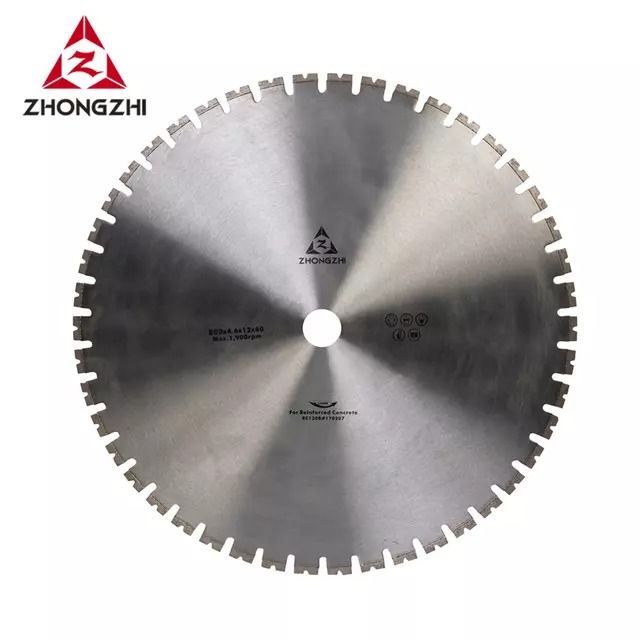
Diamond saw blades can cut metal because synthetic diamonds are among the hardest materials on earth. These lab-grown diamonds score a 10 on the Mohs hardness scale, far harder than steel or other metals. This extreme hardness allows diamond particles to grind through metals where traditional blades might fail or wear out quickly.
Synthetic diamonds maintain sharpness much longer than abrasive grains found in conventional metal-cutting wheels.
The diamond particles remove material through grinding, not slicing, which works differently on metals.
Vacuum brazing technology used by manufacturers like Zhongzhi Enterprises bonds diamonds directly to the steel core, improving durability for metal cutting.
This combination of hardness and bonding technology gives diamond saw blades an edge in cutting certain metals efficiently.
Cutting stone or concrete with a diamond saw blade relies on grinding brittle, abrasive materials that break apart easily. Metals, however, are ductile and tougher, requiring different blade characteristics.
Stone cutting blades often have softer bonds to expose fresh diamonds quickly.
Metal cutting demands harder bonds to prevent diamonds from wearing out too fast.
Metals generate more heat during cutting, making cooling essential to protect blade life.
Because of these differences, not all diamond saw blades designed for stone work well on metal.
Diamond saw blades perform best on softer, non-ferrous metals such as aluminum, copper, and brass. These metals cause less wear on the diamond segments and produce cleaner cuts.
Soft Non-Ferrous Metals: Easy on the blade, allowing longer life and smoother cuts.
Thin Metal Sheets and Tubes: Diamond blades excel at precision cutting here.
Ferrous Metals: Structural steel, rebar, and cast iron can be cut but require specialized blades with vacuum brazing or metal bonding.
Cutting very hard metals like stainless steel or hardened tool steel is generally not recommended with diamond blades due to rapid wear and inefficiency.
Using a diamond saw blade on metal comes with challenges. Metals’ toughness and heat generation can quickly degrade the blade if not managed correctly.
Excessive heat can weaken the bond holding diamonds, causing premature segment loss.
Metals tend to clog the blade, reducing cutting efficiency and increasing friction.
Incorrect feed rates or blade speeds accelerate wear and risk blade damage.
Manufacturers like Corediam Tools emphasize using the right blade bond and cooling methods to overcome these hurdles.
Diamond saw blades cut by grinding—abrasive diamond particles wear down the metal surface gradually. This contrasts with carbide or abrasive blades that shear or slice through metal fibers.
Grinding is ideal for hard, brittle materials and some metals but slower on tough metals.
The bond hardness controls how fast the blade wears and exposes new diamonds.
Softer bonds wear quickly but keep diamonds sharp for tough materials.
Harder bonds last longer on softer metals, preventing diamond loss.
Blade Bond Hardness | Ideal Material Type | Wear Rate | Cutting Efficiency |
Soft Bond | Hard materials (concrete) | Fast | High (sharp diamonds) |
Medium Bond | Mixed materials | Moderate | Balanced |
Hard Bond | Soft metals (aluminum, brass) | Slow | Longer blade life |
Understanding this balance is key for choosing the right diamond saw blade for metal cutting jobs.
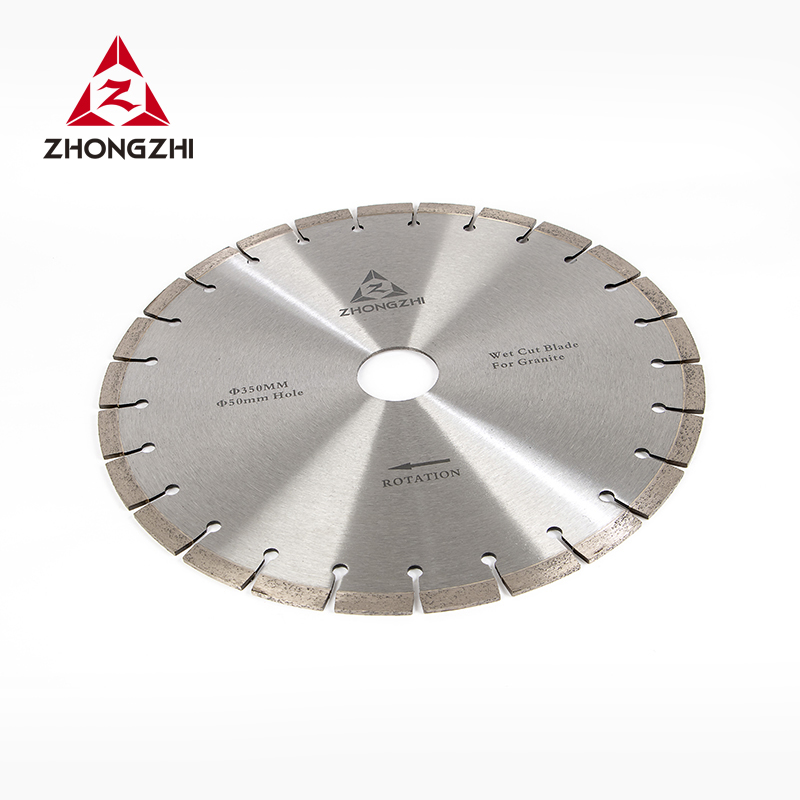
When it comes to cutting metal, not all diamond saw blades are created equal. Their effectiveness depends largely on the type of metal and the blade’s design. Let’s explore the metals diamond saw blades can handle and where they shine in real-world applications.
Soft non-ferrous metals like aluminum, copper, and brass are ideal candidates for diamond saw blades. These metals are less abrasive and generate less heat during cutting, which helps preserve the blade’s lifespan.
Diamond saw blades cut these metals cleanly and with minimal burrs.
The softer bond on these blades allows diamonds to stay sharp longer when working on soft metals.
Applications include metal fabrication, HVAC ductwork, and electrical components where precision and smooth edges matter.
Cutting thin metal sheets or tubing requires a blade that can provide accuracy without causing deformation. Diamond blades excel here due to their grinding action and precise design.
They minimize heat buildup, reducing warping or melting of thin metals.
Vacuum brazed diamond blades are often preferred for these tasks because they offer durability and consistent cutting performance.
This makes them popular in industries like automotive manufacturing and metal roofing.
Heavier, harder metals like structural steel, rebar, and cast iron demand more from a diamond saw blade. Not every diamond blade can handle these materials, but specialized blades designed for metal cutting can.
These blades typically use vacuum brazing or metal bonding to withstand intense heat and friction.
They maintain cutting efficiency even when encountering steel reinforcement inside concrete.
For example, Zhongzhi Enterprises produces reinforced concrete diamond blades that cut through rebar embedded in concrete effectively, saving time and improving safety on construction sites.
Metal Type | Blade Type | Typical Applications | Key Benefits |
Soft Metals | Soft bond diamond blades | Electrical, HVAC, metalwork | Clean cuts, longer blade life |
Thin Sheets & Tubes | Vacuum brazed diamond blades | Automotive, roofing | Precision, minimal warping |
Structural Steel | Metal-bonded/vacuum brazed | Construction, demolition | High durability, cuts rebar |
Cast Iron | Specialized metal blades | Industrial machinery, piping | Heat resistance, consistent cut |
One of the most challenging cutting scenarios involves reinforced concrete, where steel rebar is embedded within the concrete matrix. Diamond saw blades designed for this purpose combine toughness and precision.
These blades can cut both concrete and steel without frequent blade changes.
They reduce downtime on job sites and improve cutting speed.
Zhongzhi’s laser-welded diamond blades are a prime example, engineered to handle mixed materials efficiently.
On construction sites, cutting rebar inside concrete is a common task. Traditional blades wear out quickly or require multiple blade swaps. Using a diamond saw blade designed for reinforced concrete, like those from Zhongzhi Enterprises, allows workers to:
Cut through steel and concrete in one pass.
Maintain blade integrity longer, reducing replacement costs.
Improve safety by minimizing kickbacks and blade failure.
These practical applications highlight how choosing the right diamond saw blade can dramatically impact productivity and cost-efficiency in metal cutting operations.
A: No, standard diamond blades for stone or tile are not suitable for metal. Use metal-specific diamond blades to avoid damage and safety risks.
A: It varies by quality and usage. High-quality blades can last up to 120 hours, while low-quality blades may last only about 10 hours.
A: Yes, water or air cooling helps reduce heat, prolong blade life, and improve cutting efficiency when cutting metal.
A: Generally not recommended. Stainless steel is hard and can quickly damage diamond blades. Specialized carbide blades are better.
A: Use fine-grit diamond blades and proper cutting speed, followed by polishing or filing edges for a smooth finish.
Diamond saw blades can cut metal, but only with the right blade and technique. Choosing specialized blades is crucial for effective metal cutting. Always use blades safely to maximize lifespan and cutting quality. For expert advice or to find the perfect diamond saw blade, contact Corediam Tools or Zhongzhi Enterprises.