
How do experts slice solid stone as smoothly as butter? Traditional saws struggle against concrete, marble, and brittle ceramics. This challenge demands a smarter, stronger cutting solution. In this post, you'll learn what a Diamond Wire Saw is. We cover how it works, uses, and how to choose.
A Diamond Wire Saw operates through abrasion, not sharp teeth or aggressive biting edges, and it relies on diamond particles fixed along a flexible wire to gradually grind material away. This approach changes how cutting pressure behaves, making it controlled, predictable, and stable, rather than abrupt or force-driven. Traditional toothed saws apply pressure in bursts, which crack edges, generate shock, and leave uneven surfaces; this system works differently, removing material layer by layer while guiding the cut instead of forcing it.
We see a clear structural difference, as toothed saws tend to tear and chip, while Diamond Wire Saw systems polish as they progress. It improves dimensional accuracy, reduces surface damage, and keeps structural integrity intact, so operators gain better control, and machines experience lower mechanical strain. The process feels smoother, more refined, and noticeably precise.
This method also supports varied cutting paths, so straight lines feel simple, curves stay natural, and deep cuts remain secure. It adapts across positions without heavy adjustments, while the abrasive principle allows consistent results across different environments, and it suits manual setups or automated industrial rigs equally well.
Diamonds rank highest on the hardness scale, and this property gives the Diamond Wire Saw its core strength, allowing the cut to progress through granite, reinforced concrete, engineered stone, ceramics, and technical composites. Other materials fail under this resistance, as they lose sharpness quickly, overheat easily, and wear down faster than expected.
Here, diamonds maintain structural performance, as they grind instead of break and create controlled friction that supports steady penetration. It avoids tool collapse, keeps performance reliable across long operation cycles, and gives us predictable output alongside stable cutting speed.
It also supports multi-material transition, as one system can slice through stone, then move into concrete sections without sudden shifts or constant tool replacement. It reduces downtime, improves productivity, and saves both labor and material cost, which improves overall workflow efficiency.
The relationship between hardness and efficiency becomes clear below:
Material Type | Traditional Saw Performance | Diamond Wire Saw Performance | Resulting Benefit |
Granite | Rapid dulling | Stable grinding | Clean edges, low wastage |
Reinforced Concrete | Tool vibration | Smooth penetration | Structural safety preserved |
Engineered Stone | Chipping risk | Controlled abrasion | High finish quality |
Ceramic Slabs | Cracking tendency | Gentle precision | Reduced rejects |
This advantage supports large infrastructure projects and precise fabrication alike, as it fits both industrial needs and specialized tasks without compromising consistency.
Flexibility sets this system apart, as the wire bends and adapts to complex shapes, moves through confined spaces, and changes direction without stopping the process. Continuous rotation enhances cut uniformity, so no sudden force spikes appear, and no uneven tension buildup disrupts stability.
They rely on smooth flow, while we gain stable tracking and consistent motion control. The cut follows planned geometry, operators maintain reliable accuracy, and this dynamic movement reduces stress points along the surface, helping avoid structural micro-fractures and protecting surrounding sections.
Flexibility brings operational freedom, so tight corners feel accessible, vertical sections feel easier, and large blocks remain manageable. It suits quarry block separation and architectural shaping alike, as we control curve flow instead of relying on fixed blade limitation.
This motion style also improves safety, as reduced vibration leads to better handling stability, allows longer working hours, decreases fatigue risk, and supports safer equipment longevity.
Key advantages of flexibility include:
● Complex shape adaptability
● Reduced repositioning need
● Stable cutting path control
● Consistent material interaction
● Enhanced operational comfort
Each advantage reinforces precision, accuracy, and efficiency in demanding cutting environments.
Heat generation presents a common problem in conventional cutting, as excessive friction reduces surface quality, creates burn marks, and weakens structure. The Diamond Wire Saw eliminates much of this through controlled abrasion and integrated cooling systems, so heat disperses effectively, components stay protected, and surface integrity remains strong.
Vibration stress damages materials and tools alike, while traditional systems create excessive movement; this often results in cracking and uneven cuts. This system keeps motion fluid, distributes pressure evenly, and dampens shock, so machinery remains stable, and surface results appear noticeably smoother and more consistent.
Material wastage becomes another major concern, because broken edges, cracked tiles, and chipped stone all represent cost loss. Here, cut precision limits unnecessary excess removal, each pass stays efficient, each surface retains clarity, and we reduce waste ratio while maximizing usable output.
The performance improvement becomes measurable, as fewer pieces face rejection, maintenance frequency drops, tool lifespan improves, and production predictability increases across project stages.
Beyond mechanical advantages, value extends into operational planning, since project timelines improve, energy consumption reduces, and equipment lifecycle increases. It benefits production sustainability goals and supports financial optimization strategies across modern manufacturing frameworks.
We understand that a Diamond Wire Saw functions as more than a cutting tool; it becomes an intelligent material treatment system that respects surface integrity, supports structural stability, and enhances workflow predictability.
The core purpose becomes clear, as it offers precision under pressure, delivers efficiency without compromise, and responds intelligently to material demands. This system redefines expectations in heavy-duty cutting environments while remaining accessible to newer operators, which explains its rising use across modern industrial and construction fields.
A Diamond Wire Saw cuts through materials by controlled abrasion, not sharp impact or tearing force. It uses diamond beads or bonded segments along a flexible cable, and they grind surfaces gradually. This action removes micro-layers, creating smoother edges and stable geometry. We see consistent cutting depth, even pressure distribution, and predictable surface interaction across various materials.
Bead systems offer segmented contact points, while bonded segments create continuous friction zones. Both approaches support precise material reduction. It feels efficient and balanced, and operators maintain clear control over cutting performance.
Wire tension determines operational accuracy and structural reliability. Too much tension creates stress; too little leads to deviation. Proper balance keeps the wire aligned and motion stable. It ensures consistent contact pressure between diamonds and material.
Controlled tension minimizes lateral movement and reduces vibration spread. We maintain predictable progression, and surface geometry remains precise. This contributes to smoother finishes and reduced machine strain during prolonged operation.
Cooling systems manage heat generated by friction. They protect diamonds from thermal degradation and prevent premature tool wear. Water spray or mist systems flush away debris, supporting clean contact points and continuous efficiency.
Heat disperses evenly, sharpness stays intact, and machine lifespan improves. We benefit from reduced maintenance intervals and sustained cutting performance.
Wet cutting uses water to cool and clean the cutting area, whereas dry cutting relies on airflow alone. Wet workflows reduce dust and heat buildup, making them ideal for dense materials and indoor environments. Dry cutting simplifies setup yet demands careful speed regulation.
Performance comparison:
Feed rate and speed work together to regulate cutting force. Fast feed rate increases productivity yet risks surface damage. Slower feed boosts accuracy but lowers output. Material resistance also shifts optimal settings.
We adjust speed based on hardness level. Softer materials tolerate higher movement. Harder surfaces demand measured progression. Balanced interaction enhances operational precision and prevents overheating or stalling.
Flexibility allows the wire to follow complex geometries. Curves, corners, and deep recesses remain accessible. It adapts easily to structural contours and confined spaces. Continuous motion supports smooth transitions and consistent penetration depth.
This flexibility expands application potential. It benefits quarry separation, architectural detailing, and industrial shaping tasks. Operators guide movement without aggressive repositioning, improving workflow continuity.
Tip: This operational design supports accuracy-driven tasks and ensures reliable performance across challenging cutting environments.
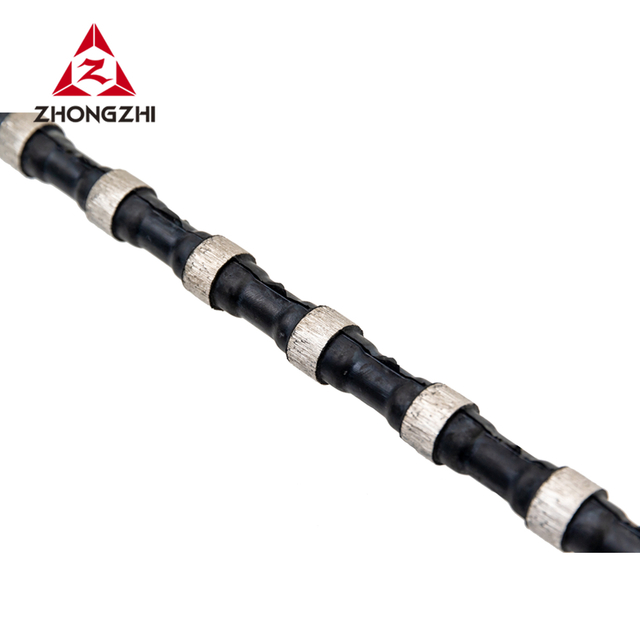
The core cable defines strength, flexibility, and operational stability. Steel cores deliver high tensile resistance, so they suit reinforced concrete and dense stone cutting. It holds shape under stress, reduces deformation risk, and maintains consistent alignment. However, it shows lower flexibility, so tight curves feel less natural.
Polymer cores offer lighter weight and improved bending capability. They adapt better to complex paths and narrow spaces. It supports smoother redirection, reduces machine load, and improves handling comfort. We often see this option in precision stone or ceramic operations, where adaptability matters more than extreme strength.
Core Type | Main Strength | Flexibility Level | Ideal Application Area |
Steel | High tensile resistance | Moderate | Concrete, heavy stone |
Polymer | Lightweight adaptability | High | Ceramics, curved stone cutting |
Diamond cutting elements control abrasion quality and tool lifespan. Sintered beads provide dense diamond concentration, so they offer long working life and stable grinding power. They suit high-demand environments and extended cutting cycles.
Electroplated elements create a thinner diamond layer, so they deliver fast initial cutting and sharp surface response. It improves speed, although durability becomes shorter over long use. Resin-bonded diamonds balance performance and cost, supporting lighter workloads and smoother finish requirements.
We evaluate cutting elements based on performance needs and surface outcome expectations. Each type contributes differently to precision, speed, and operational longevity.
Tensioning systems control wire alignment and directional consistency. Proper tension keeps the cutting path steady and reduces lateral deviation. It ensures uniform pressure on the surface, supporting straight and predictable cutting lines.
Guiding assemblies direct wire motion and stabilize its travel. They reduce vibration interference and maintain even diamond contact across materials. We benefit from cleaner edges, reduced surface shake, and reliable structural shaping.
Key functions of tension and guiding systems include:
Cooling systems regulate temperature and protect diamond surfaces from heat damage. They distribute water or coolant fluid evenly, keeping friction under control. It prevents premature wear, extends tool life, and maintains consistent efficiency.
Lubrication supports smooth movement and reduces metal fatigue. It keeps internal components functioning without excessive resistance. We see improved cycle duration and stable cutting continuity in prolonged operations.
The Bead Type Diamond Wire Saw uses individual diamond beads spaced along a flexible cable, and each bead performs focused abrasive contact. It supports precise control, predictable cutting depth, and stable edge formation. We often see it used where accuracy matters more than raw speed. It delivers consistent removal and clean separation across stone slabs and precision blocks.
This structure allows segmented grinding pressure, so operators adjust performance more easily. It suits tasks where surface finish and dimensional accuracy define success. They rely on defined contact points, and it helps maintain uniform wear patterns across extended use cycles.
The Rope Type Diamond Wire Saw features a continuous diamond-embedded surface rather than separated beads. This design creates uninterrupted friction zones, allowing smoother progression through dense materials. It performs effectively in large-scale operations, and they favor it for heavy-duty demolition or deep structural separation.
Continuous cutting motion improves speed consistency and reduces surface vibration influence. It handles long cutting paths more effectively, and we see better performance in reinforced concrete and quarry environments. This design supports sustained output and limits downtime caused by interrupted contact.
Different industries demand targeted solutions, so manufacturers offer specialized configurations. Quarry-focused versions support block separation and natural stone extraction. They emphasize durability, stable tension management, and high load capacity. Demolition-focused variants prioritize torque strength and shock resilience.
We often select based on operational conditions. Harsh environments need rugged performance. Controlled workshop settings demand refined precision. Each variant reflects its operational role, and it improves efficiency when correctly aligned to project scope.
Application Area | Preferred Type | Performance Focus | Typical Result |
Stone Quarrying | Rope Type | Continuous load handling | Smooth block separation |
Demolition | Rope Type | High resistance strength | Efficient structural removal |
Precision Stone | Bead Type | Clean edge control | Accurate shape refinement |
Tile Processing | Bead Type | Fine surface finishing | Reduced material damage |
Project complexity influences cutting method selection. Simple shapes allow flexible options. Intricate structures require stable control and refined movement. We adjust saw choice based on material hardness, thickness, and surface geometry.
Harder materials demand higher tensile strength and continuous abrasion capacity. Softer materials benefit from sharper, localized contact zones. We balance speed and precision based on production goals and surface quality requirements.
Diamond Wire Saw systems play a critical role in modern stone quarrying, where efficiency, precision, and block integrity define success. It separates large stone blocks from bedrock using steady abrasive motion, and operators maintain clean edges through controlled tension. We see smoother block profiles, reduced cracking risk, and improved yield quality across extraction stages.
They support marble, granite, and limestone processing, and the flexible wire adapts to irregular geological structures. It enables deeper penetration without surface collapse, and the overall waste level stays controlled. This method improves operational safety, while maintaining visual consistency required for architectural stone.
In construction and demolition environments, Diamond Wire Saw technology handles reinforced concrete and dense structural materials using continuous abrasive force. It maintains consistent depth control during bridge modifications, foundation removal, and structural segmentation. We see reduced vibration impact, so surrounding structures experience less disruption.
It offers clean separation through steel-reinforced zones, preventing surface spalling and unnecessary fragmentation. They work efficiently on vertical or horizontal planes, and operators achieve accurate cuts even in confined spaces. This minimizes rebuilding expense and supports safer project execution.
Diamond Wire Saw systems support precise shaping of tiles and ceramic materials, where surface appearance and dimensional accuracy matter. It delivers smooth edge finish and controlled pressure distribution. We avoid surface chipping and maintain consistent geometry on fragile components.
They operate effectively on porcelain, engineered ceramics, and decorative panels used in premium applications. The wire adapts to thin sections, delicate contours, and intricate layout demands. It supports both batch production and custom pattern creation across design-oriented industries.
Production efficiency improves due to reduced rework and material loss. It also enhances visual consistency across finished products, which supports branding and quality differentiation.
Advanced manufacturing sectors rely on Diamond Wire Saw systems to shape technical components used in aerospace, electronics, and precision engineering. It handles high-density alloys and composite materials requiring micro-level accuracy. We achieve consistent tolerance and minimal surface distortion.
These systems support highly detailed shaping, thin slicing, and controlled separation of complex assemblies. It ensures predictable performance under pressure, and process stability increases overall production reliability. Each cut maintains both structural precision and refined surface texture.
Industry Sector | Primary Use Case | Key Performance Outcome | Operational Advantage |
Stone Quarrying | Block extraction and shaping | Clean separation, low damage | High yield efficiency |
Construction Demolition | Reinforced concrete segmentation | Stable structural removal | Reduced vibration impact |
Tile and Ceramic | Precision surface cutting | Smooth edges, visual accuracy | Low material waste |
Advanced Manufacturing | Specialized component shaping | Tight tolerance, fine finish | Consistent quality control |
A Diamond Wire Saw uses diamond abrasion for cutting hard materials, and it delivers stable precision and smooth performance. It supports efficient industrial processing and resource optimization. Zhongzhi offers reliable Diamond Wire Saw products with strong durability and accurate control, helping projects achieve higher efficiency and consistent cutting value.
A: Diamond Wire Saws cut stone, concrete, and ceramics using abrasive diamond beads for precise results.
A: Diamond Wire Saws reduce vibration, limit waste, and deliver smoother, more accurate cuts.
A: They grind materials through continuous diamond friction and controlled wire tension.
A: Cost varies, yet Diamond Wire Saws offer long lifespan and strong return value.
A: Poor cooling, incorrect tension, or worn beads reduce Diamond Wire Saws performance.