Views: 0 Author: Site Editor Publish Time: 2025-10-20 Origin: Site
The process of diamond coring has grown to be quite important when it comes to general construction; especially with cutting concrete for building. It allows for precise and clean cuts, while also helping builders to improve their speed and overall efficiency.
To make diamond coring work, you need a diamond coring machine. Much has been said about the benefits of diamond coring machines, but how do they actually work? Let’s find out.
To put it simply, a diamond coring machine is a custom piece of machinery that helps constructors drill accurate circular holes in just about any strong material.
Today, constructors are faced with a major difficulty; they need solid materials for their projects, but crafting the shapes they need out of these materials can be challenging due to their density and strength. With a diamond coring machine, this problem disappears almost immediately.
Diamond coring machines cut a wide variety of materials, ranging from concrete to asphalt and stone. In specialized cases, they could even be used to cut stone, brick, and rock samples (for geological studies, for instance).
Today, diamond coring machines are a staple in any construction project. Whether it’s their ability to deliver clean cuts or their low-vibration applications, these machines are incredibly advantageous across the board.
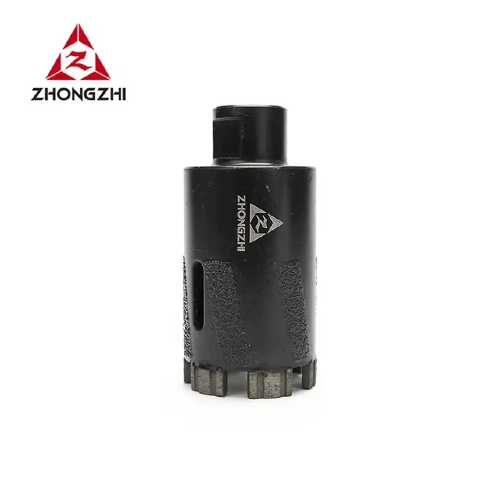
For it to work so effectively, a core drill machine is made up of several intricate components that work together. These include:
The motor unit acts as the primary for the diamond core drilling piece. Generally, constructors can choose whether they’d like an electric motor unit, a pneumatic one, or one with a hydraulic system; all depending on what they’d need from the core drilling machine.
This acts as a strong frame that holds up the drill bit and the motor unit. Some stands come with adjustable mounts and anchors, which offer even more stability to the overall machine.
With the core bit, you have the component that does the actual cutting. It’s hollow and cylindrical, and it comes with diamond segments just on top of the rim. Core bits come in different sizes, so be careful with your choice.
To properly manage the heat generated, the diamond coring machine includes a water supply system. The cooling system also removes dust and helps maintain a clean drilling area.
Here, you have a crank or lever that allows you to maintain pressure on the overall bit. This way, cutting is smoother and more consistent.
This is a base plate that gives a secure fit between the rig and the surface you’re drilling, so unwanted movement is prevented.
III. Typical materials the machines cut (concrete, asphalt, stone).
Now that we understand what the diamond coring machine is, let’s examine how diamond drilling works.
Generally, the guide for operating a core drilling machine will depend on the type of coring you’re doing - wet or dry.
With wet coring, you’re cooling the diamond bit with water and flushing out any debris that comes out as a result of the process. It’s the most common coring process used, with the water serving to reduce friction while keeping the bit relatively cool.
On the other hand, dry coring replaces water with vacuum suction or air. Thanks to the introduction of dust extraction or airflow, the coring machine can escape overheating, and you also get a more portable workspace that’s easier to set up.
Now, let’s look into the processes to understand how the diamond coring machine handles them.
To begin, you’ll need to leave a mark at the center of the hole on the surface.
If you’re working with a larger bit, we’ll recommend that you have a smaller pilot drill that keeps the core bit steady. This way, work becomes even easier.
Next, attach the diamond core bit securely to the mandrel and make sure it’s tight.
Fix the bit to the water supply, and check to see that water flows steadily; not too excessively, though.
Now, you need to choose the right RPM. Here, you want to consider the material you’re cutting and the size of your bit. A lower RPM works better for larger diameters, while small bits will need a higher RPM.
Start the motor unit at a low speed, then let the bit contact the material’s surface very lightly. From there, apply a steady feed pressure with the handle. You don’t want to force things here.
While the diamond core drilling process works, always check to ensure that water flows consistently
Keep an eye on the load on the motor. As the load grows, you either reduce the material feed or raise the water supply. If you’re working with a deep hole, you can periodically back the bit out so the machine cools down a bit.
Once the bit gets to the appropriate depth, cut the feed and stop the motor, then remove the core from the hollow on the bit. Clean the area, and you’re done.
With dry coring, you want to ensure you use the right dry-rated core bit. Also, see to it that the machine comes with a compatible vacuum.
You can follow the same pilot, anchoring, and mounting procedures that work for wet coring
Now, remember to set up dust extraction before you turn the motor on. Maintain a light feed also, since this process tends to cause more heat
If you’re working on a deep hole, we recommend going slowly, retracting to take out dust and cool the machine, then repeating the process.
Finally, remember to inspect the process regularly just to keep an eye out for overheating and debris.
When you’re done, follow these steps to ensure a proper shutdown:
First, power the motor down and wait for the bit to stop spinning entirely
Turn the water off - or, in the case of dry coring, the vacuum
Unmount the rig after you release the feed, but remember to only do this once the motor has stopped completely.
Take out the core bit, clean the core, and inspect the entire setup for any issues
To ensure that you have the entire core drilling process locked, here are a few critical tips you need to keep in mind:
Once you’re done with the diamond coring machine, clean it and let it dry. Every piece of moisture and sludge should be taken out, and pay special attention to the electrical parts
Carefully inspect parts like seals and bearings, and if you notice any worn parts, replace them.
Look out for wear on the diamond segment. If segments are missing or worn out, then replace the affected bits
Always ensure that the coolant lines are free. If you’re using dust extraction filters or vacuums, clean them before use.
Bits should be stored while upright. They should be kept in dry areas always
Finally, always wear protective garments while using diamond core machines. This can’t be overstated.
Working with diamond coring machines is an intricate process that requires a lot of skill. That said, you want to avoid these mistakes:
Using the wrong bit for the material: Before you begin drilling, always make sure there’s a good match between the two.
Skipping cooling: Honestly, nothing can be more detrimental to the health of your coring machine than this.
Applying too much or too little pressure: Finding a delicate balance of pressure can be challenging, but it’s very important overall for your machine.
Diamond coring machines are truly impressive tools. Their flexibility and ability to deliver precise cuts make them very popular, especially in complex construction work.
To learn more about the machines or to place an order, reach out to us at Zhongzhi Enterprises. We will be more than happy to help you out.