Views: 0 Author: Site Editor Publish Time: 2026-06-16 Origin: Site
Ultra-precision cutting demand is increasing rapidly across modern manufacturing industries. Sectors such as heavy industry, advanced optics, energy, and semiconductor production now require extremely high levels of dimensional accuracy and surface quality. In many applications, modern substrates demand near-flawless cutting performance with minimal material loss and thermal impact.
Traditional abrasive cutting methods often struggle to meet these requirements. They typically produce wider kerfs, generate excessive heat, and can introduce micro-cracks or structural damage within sensitive materials. Over time, these limitations reduce material yield, increase post-processing requirements, and negatively affect overall production efficiency and profitability.
Diamond wire saw technology provides a highly efficient and precise alternative. By utilizing continuous wire cutting with embedded diamond abrasives, it significantly reduces cutting resistance and material waste. This allows manufacturers to achieve cleaner cuts while preserving the structural integrity of high-value materials such as silicon, sapphire, ceramics, and advanced composite substrates.
This guide is designed to support technical decision-makers and procurement teams in evaluating diamond wire saw systems for industrial applications. It provides a structured overview of equipment architecture, performance characteristics, and material compatibility considerations. In addition, it highlights key selection criteria that directly impact cutting efficiency, operational stability, and long-term investment value.
By understanding these core factors, manufacturers can make more informed equipment decisions, improve production yield, and optimize capital investment in ultra-precision cutting systems.
Yield Optimization: Diamond wire saws drastically reduce kerf loss, a critical factor when cutting high-value substrates like silicon, sapphire, or advanced ceramics.
Technology Shift: The transition from oscillating (spooling) to endless (continuous loop) wire systems has revolutionized cutting speeds and surface finish quality.
TCO over Upfront Cost: True ROI depends heavily on wire consumption rates, tension control systems, and machine downtime, rather than just the initial purchase price.
Vendor Validation: A successful procurement requires mandatory sample testing and a clear assessment of the supplier's consumable supply chain.
Many industrial facilities still rely on legacy cutting tools. Band saws and abrasive slurry systems create distinct business problems daily. They suffer from exceptionally wide kerfs and excessively slow processing times. High thermal stress often damages delicate or heat-sensitive materials during cutting. You lose significant profit margins to material waste during this initial phase.
Traditional abrasive slurry systems create massive environmental challenges. Facilities must manage hazardous waste disposal constantly. Operators spend hours cleaning the workspace. Slurry pumps require frequent maintenance routines. They wear out quickly due to the highly abrasive environment. Older machines essentially drain your maintenance budget.
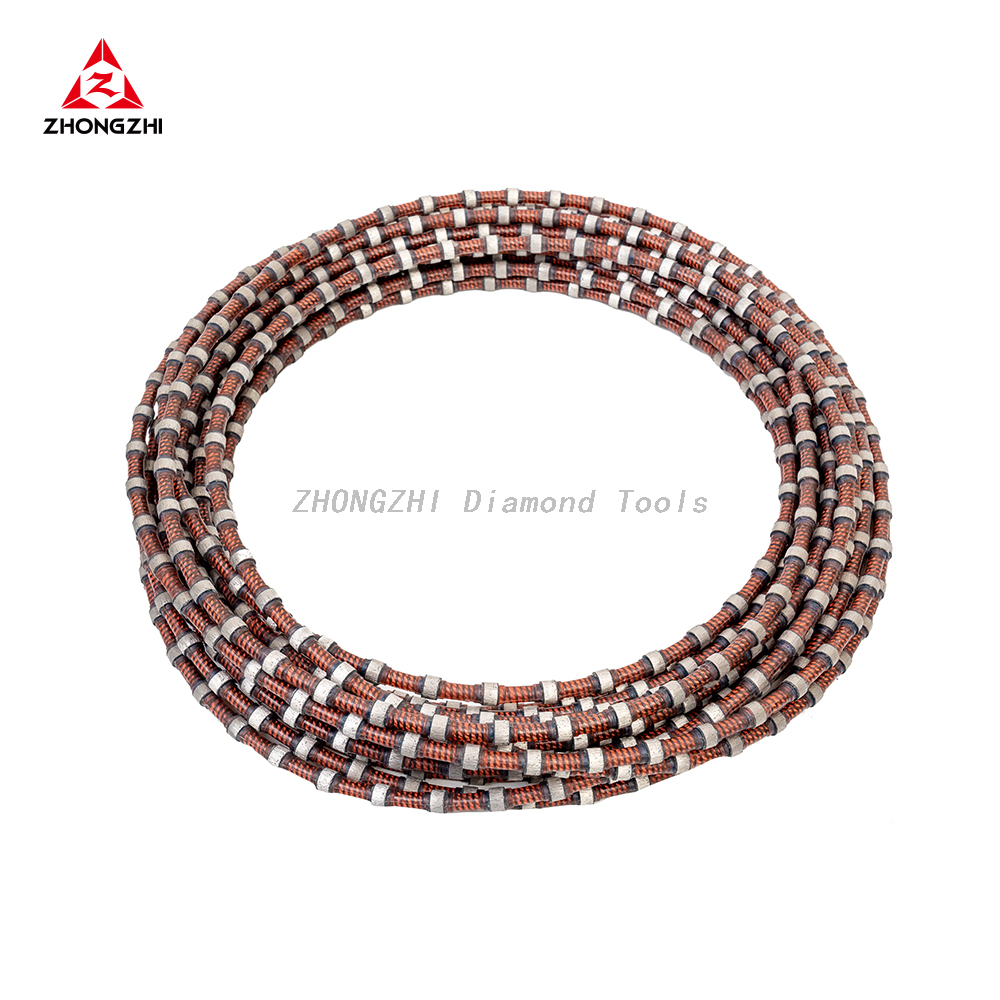
Diamond wire technology provides a clear and immediate solution. Manufacturers use electroplated or resin-bonded diamonds fixed securely onto a high-tensile core. This innovative configuration offers much faster linear speeds. It also creates significantly cooler cutting zones. A modern wire machine eliminates messy slurry pools completely. The cutting process remains significantly cleaner. Your facility footprint stays much safer for floor personnel.
You will notice measurable advantages almost immediately. We often see exact yield improvements when transitioning to this modern equipment. Operators spend less time on secondary polishing steps. Automated CNC operation lowers necessary labor interventions drastically. Upgrading to this technology yields substantial financial returns.
Consider implementing these best practices before evaluating new machinery:
Assess your current kerf loss metrics accurately across all production lines.
Identify specific materials prone to heat-induced micro-cracking.
Calculate total labor hours spent on post-cut surface polishing.
Compare these internal baselines directly against modern wire cutting capabilities.
Selecting the correct machine architecture determines your production success. We can categorize these machines into very specific functional configurations. You must align the equipment type with your core material dimensions.
These advanced systems operate in a single continuous direction. They achieve very high linear speeds up to 60 meters per second. The continuous loop design eliminates directional reversal marks entirely. Older systems frequently leave these unwanted mechanical marks. This configuration works perfectly for precision optics and high-value laboratory materials.
If your facility cuts delicate crystals, prioritize an endless Diamond Tools Wire Saw immediately. The unidirectional cutting force strongly prevents edge micro-cracking. Constant kinetic friction ensures a pristine surface finish.
These robust units use a long wire moving back and forth. They suit massive workpieces much better than endless loops. Large stone quarrying and heavy metallurgy rely on this specific method. Continuous loops become structurally unfeasible for such enormous industrial dimensions. Spooling systems inherently pause when reversing direction. This micro-second pause leaves a distinct physical mark. Manufacturers must remove these marks later using aggressive lapping techniques. However, for massive raw stone, this surface finish compromise remains acceptable.
Facilities must choose carefully between benchtop and floor-standing footprints.
Lab/R&D Scale: These benchtop units focus strictly on micron-level precision. They offer great dry and wet cutting versatility. Researchers use them for small-batch prototyping.
Industrial Scale: These floor-standing, multi-wire systems dominate modern factories. Manufacturers design them specifically for high-throughput batch production. They handle multiple heavy ingots simultaneously.
High-precision diamond wire saw machinery engineered for demanding industrial applications.
Understanding material compatibility ensures optimal machine performance. You must align the wire specifications exactly to your specific workpiece. Using the wrong consumable destroys the cutting tool rapidly.
We created a simple compatibility chart below. This chart summarizes standard industrial applications accurately.
Material Type | Typical Application | Recommended System |
|---|---|---|
Monocrystalline Silicon | Semiconductor wafers, solar cells | Endless / Multi-wire |
Sapphire & Quartz | Optics, watch faces, lab slides | Endless / Lab-Scale |
Industrial Stone | Construction, architectural elements | Oscillating / Spooling |
Ferrous / Non-Ferrous Metals | Aerospace components, heavy metallurgy | Industrial Scale |
Thinner wires strictly maximize your overall material yield. Diameters under 0.3mm require much slower feed rates. They also demand highly sophisticated tensioning mechanisms to prevent snapping. Thicker wires exceeding 1.0mm offer immense physical durability. They handle highly aggressive cutting environments easily. Reinforced concrete and raw granite require these thicker profiles. However, thicker wires permanently sacrifice your narrow kerf advantages.
Diamond grit size directly impacts the final post-cut surface roughness. Engineers measure surface finish using Ra values. Lower Ra numbers indicate significantly smoother surfaces. Finer grit produces exceptionally low Ra values. This incredible precision potentially eliminates subsequent lapping processes entirely. Rough cuts demand intensive secondary processing. Polishing fragile substrates often risks expensive breakage.
Always match the diamond grit size specifically to your target material. You save considerable time and money. Ensure the specific bonding matrix suits the workpiece hardness perfectly. Electroplated wire exposes more diamond crystals, cutting faster but wearing quicker. Resin-bonded wire holds diamonds tighter, offering a smoother finish overall.
Evaluating an equipment upgrade requires rigorous financial modeling. You must look far beyond the basic machine price tag. True financial returns stem from comprehensive operational efficiency.
Your base machine cost represents just one single factor. Specialized fixtures and custom work-holding devices add to the initial investment. Facility integration often requires specialized cooling systems. You might also need expensive electrical power upgrades. Procurement teams must budget for complete installation and operator training.
Daily operations incur ongoing variable costs. Wire lifespan dictates your exact replacement frequency. Coolant and cutting fluid consumption also impact your monthly budget heavily. You must calculate these consumables accurately to understand true profitability.
Machine downtime quickly erodes your profit margins. Wire breakage stops production entirely and requires manual intervention. Energy consumption during extended cutting cycles affects facility utility bills. Substandard equipment frequently requires expensive spare parts.
A robust ROI model includes multiple distinct mathematical variables. Consider the sheer cost of raw silicon ingots. Aerospace-grade sapphire boules also cost thousands of dollars. Every millimeter of kerf waste destroys actual profit directly. Shaving just a fraction of a millimeter saves serious money.
Value of saved material via strict kerf reduction.
Increased overall production throughput per shift.
Elimination of secondary machining and lapping steps.
Multiply this saving across thousands of annual cuts. The financial return becomes extremely compelling quickly. The machine essentially pays for itself through salvaged material alone. When modeling ROI, ask vendors for documented consumption rates. Request the exact meters of wire consumed per square meter cut. Do not rely solely on the flat price per meter.
Choosing the right equipment vendor mitigates long-term operational risks. You need a reliable partner capable of sustaining your production goals. Hardware specifications mean nothing without excellent factory support.
Machine tensioning directly prevents catastrophic wire snaps. Assess the specific tensioning mechanism thoroughly during evaluations. Pneumatic and mechanical systems offer basic industry reliability. Advanced servo-driven closed-loop tensioning provides vastly superior precision. These systems automatically adjust tension in real-time. They adapt to varying material densities instantly.
Never purchase complex machinery off a standard spec sheet. Require vendors to conduct strictly documented test cuts. They must use your exact raw material for this test. Verify the feed rates, exact kerf measurements, and final surface finish. We always recommend evaluating the Ra value during these test cuts. A superior finish proves the machine's overall structural rigidity.
Evaluate the CNC interface carefully during live demonstrations. Intuitive software reduces operator training time drastically. The system should definitely support custom cutting profiles. Automatic fault detection remains completely non-negotiable for unattended operation. Machine vision systems can sometimes detect wire bowing before breakage occurs.
Verify the vendor’s consumable supply chain stability thoroughly. They must supply replacement diamond consumables consistently. Rapid technical support minimizes unexpected production downtime. Ensure they stock critical spare parts locally within your region. A great machine fails without proper maintenance support.
Procuring ultra-precision cutting equipment requires careful strategic alignment. You must match the exact machine architecture to your primary production goals. Endless loops serve high-value crystals best, while spooling systems conquer massive workpieces easily. Success depends heavily on balancing your wire diameter against desired feed rates. Proper financial modeling reveals the true value of minimizing kerf loss.
Take these immediate action steps to begin your procurement journey:
Audit your current material waste costs over the last fiscal quarter.
Quantify the total labor hours dedicated to secondary surface lapping.
Send raw material samples to at least three different equipment vendors.
Demand closed-loop tensioning systems for any new machine purchases.
Evaluate the long-term consumable supply chain before signing contracts.
A: Wire lifespan depends entirely on the workpiece material and cutting parameters. Cutting soft silicon allows the wire to last for several days of continuous operation. Aggressive materials like reinforced quartz degrade the diamonds faster. Typically, an endless loop lasts between 40 to 100 hours of active cutting. Operators must monitor wire diameter closely. When the wire loses its cutting edge, feed rates drop significantly. Always replace the wire before it snaps to prevent workpiece damage.
A: Yes, these machines easily cut hardened steel and various mixed alloys. Heavy industrial systems utilize thicker wires specifically designed for metallurgy. The diamond grit slices through different metal hardness levels simultaneously. This capability makes it perfect for complex aerospace components. You must adjust your feed rates when transitioning between dissimilar metals. We strongly recommend using high-volume coolant when cutting ferrous metals. Proper cooling prevents the steel from overheating and warping during the procedure.
A: Kerf loss directly correlates to the selected wire diameter. Precision lab-scale machines often utilize ultra-thin wires. These wires range from 0.1mm to 0.3mm in diameter. The resulting kerf typically adds just 10% to 20% over the wire thickness. You can expect a kerf around 0.15mm to 0.35mm. Traditional band saws produce kerfs exceeding 2.0mm easily. Upgrading to this technology saves massive amounts of valuable raw material over time.
A: Pure water works adequately for basic stone cutting applications. However, precision industrial cutting requires specialized synthetic coolants. High-performance cutting fluids provide superior lubrication. They flush microscopic debris away from the cutting zone rapidly. These fluids also prevent rust formation on the internal machine components. Using proper coolants extends your wire lifespan dramatically. Always follow the equipment vendor's specific fluid recommendations for your exact target material.