
How To Choose Diamond Segments For Stone Cutting
Views: 0 Author: Site Editor Publish Time: 2026-05-22 Origin: Site


Selecting the ideal cutting tool requires careful engineering decisions. You must balance material hardness against machine limits. Production targets also play a critical role. The wrong tool often causes blade deflection. It can also lead to premature dulling, commonly known as glazing. Excessive wear destroys your tooling investments quickly. Unplanned downtime frustrates operators and hurts production schedules.
This guide offers a structured framework for evaluating cutting tools. We will explore essential bond formulations. We will analyze structural parameters and physical tool shapes. You will learn how to match these factors to your specific stone type. This ensures precise finishing and optimal cutting efficiency. You can extend tool life by making informed choices.
Key Takeaways
Bond Matching: Utilize the inverse matching rule—soft bonds for hard, dense stones (granite/quartz); hard bonds for abrasive, softer stones (marble).
Micro-Parameters: Look for strength thresholds around 130–140 N and 50/60 mesh grit sizes for balanced durability and sharpness.
Structural Integrity: Multi-layer "sandwich" designs with lower diamond concentrations in the center naturally form a U-shape during use, actively preventing blade deviation.
Cooling Metrics: Proper wet cutting requires water flow rates of at least 1.5–2 gallons per minute directed precisely at the cut interface to avoid thermal shock.
1. The Principle of Inverse Matching: Bond Hardness vs. Stone Density
Evaluating the metal matrix is the most vital step in your selection process. Industry professionals call this matrix the bond. It holds the abrasive crystals together. The bond must wear away at a highly specific rate. This controlled erosion exposes new, sharp crystals. Understanding this relationship prevents disastrous equipment failures.
You must follow the inverse matching rule. Hard stones demand a soft bond. Soft stones demand a hard bond. This principle dictates your baseline purchasing decisions.
Cutting Hard Stones: Materials like granite, quartz, and quartzite possess immense density. They dull cutting edges rapidly. You should choose a Diamond Segment featuring a soft bond. Manufacturers often use copper-based formulas here. You can recognize them by a yellowish or golden tint. The softer matrix erodes quickly. It continuously sheds blunt crystals to reveal fresh, sharp edges underneath.
Cutting Abrasive Stones: Materials like marble, limestone, and sandstone act differently. They produce highly abrasive slurries during the cut. This gritty mud acts like liquid sandpaper. It erodes the metal matrix violently. You must select a hard bond for these applications. Iron-based formulas work best. They usually appear white or dark gray. A hard bond grips the crystals securely. It prevents premature crystal loss and extends overall lifespan.
Document the exact stone type before placing a bulk tooling order. Look up its specific rating on the Mohs hardness scale. Supply this detailed data to your manufacturer. This ensures they calibrate the powder metallurgy formula accurately. A custom-calibrated matrix performs significantly better in specific cutting environments.
2. Engineering Parameters: Grit, Concentration, and Strength
The metal matrix alone does not guarantee success. You must evaluate the micro-characteristics of the crystals. These internal variables dictate cutting efficiency. They also determine your tool's longevity. Precision engineering separates high-performance tools from cheap alternatives.
Grit Size (Mesh)
Manufacturers measure abrasive crystal size using a mesh scale. A 50/60 mesh size represents the industry sweet spot. It offers an excellent balance between durability and sharpness. Excessively large grains cut aggressively. However, they sacrifice bending strength easily. Fine grains improve overall durability. Unfortunately, they significantly reduce your cutting speed.
Diamond Concentration
Higher concentration does not mean better performance. Many operators mistakenly buy ultra-high concentration tools. Over-concentrated matrices cannot penetrate hard stone effectively. The tool simply bounces or rubs against the surface. This friction causes severe glazing.
Sandwich Structures
High-precision cutting demands advanced engineering. You should evaluate multi-layer designs. Professionals call these "sandwich" structures. Manufacturers place a lower crystal concentration in the middle layer. They put higher concentrations on the outer edges. The middle layer wears down slightly faster during operation. This natural wear creates a concave "U" shape. The resulting groove tracks perfectly through the stone. It actively prevents the blade from wandering during deep, difficult cuts.
Segment Strength
Heavy industrial use requires robust impact resistance. Verify your chosen Diamond Segment tests within the 130–140 N range. Matrix structures below this threshold shatter easily under heavy impact. Structures above this threshold prevent crystals from fracturing properly. Crystals must micro-fracture to self-sharpen.
Parameter Evaluation Chart
Parameter | Ideal Range / Type | Primary Benefit | Warning Sign (If Incorrect) |
|---|---|---|---|
Grit Size (Mesh) | 50/60 Mesh | Balances speed and durability | Chipping (too large) / Slow cut (too fine) |
Concentration | Medium-High (Material Dependent) | Maintains steady penetration | Glazing and overheating |
Structure Type | Multi-layer "Sandwich" | Prevents blade deviation | Crooked cuts, wandering blade |
Strength Threshold | 130–140 N | Optimal self-sharpening | Shattering or severe dulling |
When you cut fine-grained, homogenous stones, request narrow tool profiles. Specify multiple layers to maintain consistent pressure. This guarantees continuous sharpness throughout the project lifecycle.
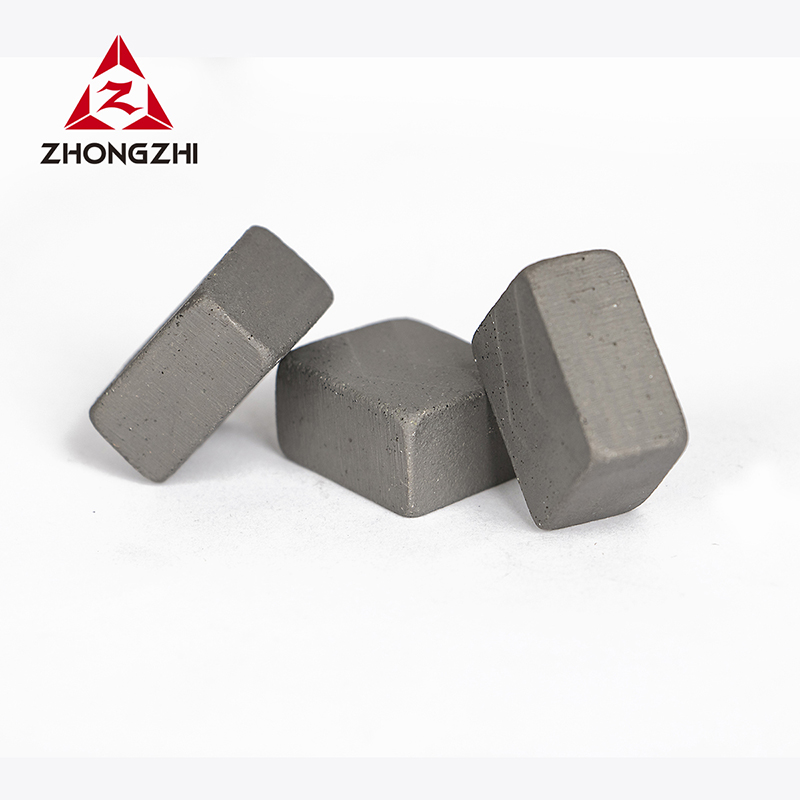
Premium multi-layer diamond segment engineered for precise stone cutting and extended durability.
3. Evaluating Diamond Segment Shapes for Specific Applications
Physical geometry influences initial cut speeds drastically. It also impacts debris removal rates. The shape determines how coolant flows through the gullets. You must match the physical shape to your specific machinery and material.
M-Shape Segments: This design features distinct saw-toothed ridges. These ridges drastically reduce the initial contact area. Reduced surface area increases downward pressure automatically. This shape works perfectly for extremely hard granite. It ensures a rapid break-in period. Operators call this "opening" the blade. However, the aggressive shape trades off some total lifespan.
K-Shape Segments: You can recognize this shape by its tapered edges. Engineers designed it primarily for heavy-duty quarrying. It excels in massive block-cutting machines. The K-shape focuses entirely on stability. It delivers ultra-long longevity rather than peak sharpness.
T-Shape Segments: This shape incorporates enhanced side clearance. It provides incredible impact resistance. Fabricators utilize T-shapes in gang saws frequently. They also use them on medium-diameter blades. Maintaining continuous sharpness without sacrificing tool life is the main goal here.
Rectangular / Cube Segments: This represents the traditional flat-top design. It offers maximum contact area against the stone. It provides exceptional material utilization. This makes it highly cost-effective for cutting soft marble. Operators use it frequently on large-diameter multi-blades.
Consider changing your tool geometry if operators struggle with tracking. Transitioning from a standard rectangular shape to an M-Shape helps immensely. A W-Shape also provides continuous cutting pressure. These advanced shapes help maintain a perfectly straight line through dense materials.
4. Dimensional Clearances and Core Integration
A cutting tool cannot function independently. Its dimensions must perfectly match the steel core of your saw blade. We call this steel body the blank. Incorrect dimensional pairing leads to catastrophic failures.
Side Clearance Rules
You must prevent the steel core from touching the stone. Rubbing causes immense friction. Friction generates destructive heat. This heat causes the steel body to lose its tension. A tensionless blade wobbles violently. Therefore, the cutting block must always be thicker than the steel core.
Large Blades (Quarry/Block Saws)
Massive industrial blades require generous side clearances. The cutting blocks must be 2–3 mm thicker than the steel core. Typical lengths range between 20 and 25 mm. Heights usually span from 10 to 20 mm. This bulk allows for heavy debris removal deep inside granite blocks.
Small to Medium Blades
Shop-based fabrication saws require tighter clearances. You generally want a thickness exactly 1–1.2 mm greater than the core. This tight tolerance maintains a very thin kerf. A thin kerf minimizes expensive material waste. It also reduces the required motor amperage.
Always inspect the welding seam visually. Manufacturers use silver brazing for wet cutting applications. It holds up perfectly under water cooling. However, dry cutting generates extreme temperatures. If you cut abrasive materials dry, laser-welded bonds are absolutely mandatory. Laser welding prevents heat-induced detachment and keeps operators safe.
5. Maximizing Segment Life: Operating Parameters & Maintenance
Your operational environment heavily influences overall performance. Even the highest-grade tools fail under poor mechanical conditions. You must control your machinery strictly. Consistent maintenance prevents costly production halts.
Water Flow and Cooling Dynamics
Wet cutting demands precise coolant delivery. Water flow must exceed 1.5–2 gallons per minute. Volume alone is not enough. You must direct the coolant exactly at the cutting interface. This is the leading edge where the tool meets the stone. Merely splashing water against the side of the steel core does nothing. Poor water delivery causes immediate thermal shock. Micro-cracks will form across the matrix instantly.
Adjusting Line Speed and Feed Rate
Operators must adjust machine settings based on stone density.
Soft or Abrasive Stone: Use a high line speed. Implement a large depth of cut. Apply a relatively slow feed rate. This combination prevents the abrasive mud from eroding the matrix too quickly.
Hard or Dense Stone: Lower your line speed significantly. Use a shallow depth of cut. Apply a fast feed rate. This constant, rapid movement forces the dull crystals to break away. It continuously exposes sharp edges.
Addressing Glazed Segments
Machine operators often report a sudden drop in cutting speed. They might hear a high-pitched whining noise. These symptoms indicate glazing. The metal bond has stopped wearing away. Dull crystals remain trapped on the surface.
You must dress the blade immediately. Perform a few shallow cuts into a highly abrasive material. An aluminum oxide dressing stone works perfectly. An old concrete block also suffices. This abrasive action grinds away the stubborn matrix. It exposes fresh, sharp crystals underneath. Your cutting speed will return to normal instantly.
Establish a standardized listening protocol for your shop. Changes in the acoustic pitch are excellent early warning signs. A screaming saw indicates coolant starvation. A whining saw indicates severe glazing. Train operators to listen carefully. Early intervention prevents thermal cracks from ruining the steel core forever.
Conclusion
Choosing the correct tool requires a multi-dimensional evaluation. You must align the bond formulation precisely with your stone's hardness. Select the appropriate physical shape to hit your target cutting speed safely. Always verify exact dimensional clearances between the cutting block and the steel core.
Standardizing these strict evaluation criteria saves immense capital. Keep a close watch on your operational parameters. Enforce strict RPM limits and mandatory water flow rates. Maintain your equipment meticulously to prevent glazing. By following these engineering principles, fabricators reduce unexpected failures and boost overall shop efficiency dramatically.
FAQ
Q: Can I use a tile/porcelain blade to cut natural stone?
A: No. Porcelain blades typically feature a continuous rim and a bond formulated for delicate, chip-free cuts on very hard, thin materials. Using them on natural stone (especially thick granite) will cause overheating, poor debris clearance, and rapid blade failure. Stone requires segmented rims (like Turbo or standard gullets) for proper heat dissipation.
Q: Why is my diamond segment turning blue?
A: A blue discoloration at the base of the segment or on the steel core indicates severe thermal damage (overheating). This is almost always caused by insufficient water flow, a glazed blade that is grinding rather than cutting, or pushing a hard-bond segment too fast through a hard stone.
Q: What is the benefit of a "Silent Core" blade compared to standard segments?
A: While the segment handles the cutting, a silent core features two sheets of steel sandwiching a copper or resin layer. This absorbs vibration and significantly reduces high-frequency shrieking, which is essential for OSHA noise compliance in enclosed fabrication shops, though it does not change the cutting capability of the segment itself.