Views: 0 Author: Site Editor Publish Time: 2025-10-01 Origin: Site
Imagine cutting through granite like a knife through butter. This is the power of diamond segments. But what exactly are diamond segments, and why are they crucial in the stone industry? In this post, you'll learn about their composition, manufacturing process, and applications, revealing why they are indispensable in cutting and grinding tough materials.
Diamond segments rely heavily on synthetic diamonds, which serve as the core cutting and grinding agents. Synthetic diamonds are preferred because they offer uniform hardness and consistent quality, essential for reliable performance. These diamonds are the hardest materials known, enabling segments to cut through tough stones like granite and marble efficiently.
The size and shape of synthetic diamonds vary based on application needs. Larger, granular diamonds with sharp edges are used for cutting and drilling, providing aggressive material removal. Smaller, flatter diamonds suit grinding and polishing, ensuring a smooth finish without deep scratches. The right diamond grit size and grade significantly impact the segment's cutting speed and lifespan.
The metal binder matrix holds the synthetic diamonds in place and supports the segment's structural integrity. This matrix is a carefully balanced blend of metal powders, including iron (Fe), copper (Cu), cobalt (Co), nickel (Ni), tin (Sn), and others. Each metal contributes unique properties:
Iron (Fe): Provides a cost-effective base.
Copper (Cu): Acts as an adhesive, enhancing bonding strength.
Nickel (Ni): Improves toughness and prevents segment breakage.
Cobalt (Co): Offers high-temperature resistance, essential for dry cutting.
Tin (Sn) and Zinc (Zn): Lower melting points, aiding sintering and bonding.
The metal matrix wears down gradually during cutting, exposing fresh diamonds to maintain cutting efficiency. Its hardness must be balanced with the material hardness; softer bonds wear faster, ideal for hard materials, while harder bonds last longer on softer materials.
Additives improve the diamond segment's performance, durability, and thermal stability. These materials help the segment withstand extreme conditions during cutting or grinding processes. Common additives include:
Graphite: Enhances thermal resistance and lubricity.
Tungsten Carbide (WC): Increases wear resistance and segment strength.
Molybdenum (Mo): Improves toughness and corrosion resistance.
Additives also influence the segment’s flexibility, allowing it to adapt to different cutting environments and materials. Manufacturers adjust additive proportions to create custom formulas tailored for specific applications, such as granite cutting or concrete drilling.
Note: Choosing the right combination of synthetic diamonds, metal binder matrix, and additives is crucial for optimizing diamond segment performance and lifespan in various stone processing tasks.
The manufacturing of diamond segments starts by blending synthetic diamond particles with metal powders and additives. This mixture must be uniform to ensure consistent performance throughout the segment. The diamonds provide the cutting or grinding power, while the metal powders form the binder matrix that holds the diamonds in place. Common metals in the binder include iron, copper, cobalt, nickel, tin, and sometimes tungsten carbide or molybdenum. Each metal adds specific properties such as toughness, wear resistance, or thermal stability.
During mixing, the proportions of diamonds, metal powders, and additives are precisely controlled. The diamond size and concentration depend on the segment’s intended use—larger diamonds for cutting, smaller for grinding. Additives like graphite or tungsten carbide improve durability and heat resistance. Proper mixing ensures the diamonds are evenly distributed, preventing weak spots in the final product.
Once mixed, the blend is placed into molds shaped like the desired diamond segment. The molding process compacts the mixture, often using cold pressing to form a solid but unsintered segment. Next comes sintering, a high-temperature process that fuses the metal powders into a solid matrix, firmly embedding the diamond particles. This step usually occurs under controlled pressure and temperature to achieve optimal bonding and structural integrity.
Sintering also helps eliminate porosity, resulting in a dense, wear-resistant segment. Some manufacturers use hot pressing, combining pressure and heat simultaneously, to create even stronger bonds. The sintering temperature and duration are carefully controlled to avoid damaging the diamonds or weakening the metal matrix.
After sintering, the diamond segments undergo finishing processes. These include grinding and polishing to achieve precise dimensions and surface quality. The segments may be shaped further, such as forming convex or stepped profiles, to enhance cutting efficiency or fit specific tools. Quality control checks ensure each segment meets strict standards for hardness, diamond retention, and dimensional accuracy.
Testing may include visual inspection, hardness measurements, and performance trials simulating cutting or grinding conditions. Defective segments are discarded or recycled. Only segments passing all tests proceed to packaging and shipment. Ensure the diamond particles and metal powders are thoroughly mixed to avoid uneven performance and premature segment failure.
Diamond segments come in various shapes and designs, each tailored to improve cutting, grinding, or drilling performance. These forms affect how the segments interact with materials, sawdust, and heat during use. Understanding these forms helps choose the right segment for specific stone processing tasks.
Convex segments have a curved, outward-bulging shape. This design improves contact with the material, enhancing cutting efficiency. The curved edge helps reduce friction and heat buildup, allowing smoother cutting and longer segment life.
Layered sandwich segments consist of multiple layers stacked together. The working layer contains diamond grains mixed with metal binders, while inner layers often have only metal powders without diamonds. This layered structure increases sharpness and reduces production costs. The non-diamond layers act as buffers, helping to expose fresh diamonds gradually and maintain cutting performance over time.
L-shaped segments feature a right-angled profile resembling the letter "L." This shape provides a strong mechanical bond to the saw blade or tool body, improving segment stability during cutting. The design also helps with heat dissipation and sawdust removal, reducing wear and tear.
Step-shaped segments have a stair-like profile with one or more steps. This form increases the segment's surface area, improving cooling and debris clearance. It also reduces the contact area between the segment and the material, lowering friction and energy consumption. Step-shaped segments are useful in cutting harder materials where heat buildup is a concern.
Each segment form suits different applications:
Convex segments excel in granite and marble cutting, offering smooth cuts and longer lifespan.
Layered sandwich segments fit large gang saws or diamond circular saw blades, providing cost-effective sharpness and durability.
L-shaped segments are common in diamond grinding wheels and blades requiring strong bonding and heat resistance.
Step-shaped segments work well in cutting concrete and asphalt, where efficient cooling and debris removal are critical.
Choosing the right form depends on the material hardness, cutting speed, and tool type. Manufacturers often customize segment shapes to optimize performance for specific stone processing tasks. Select diamond segment forms based on the material and cutting conditions to maximize efficiency and extend tool life.
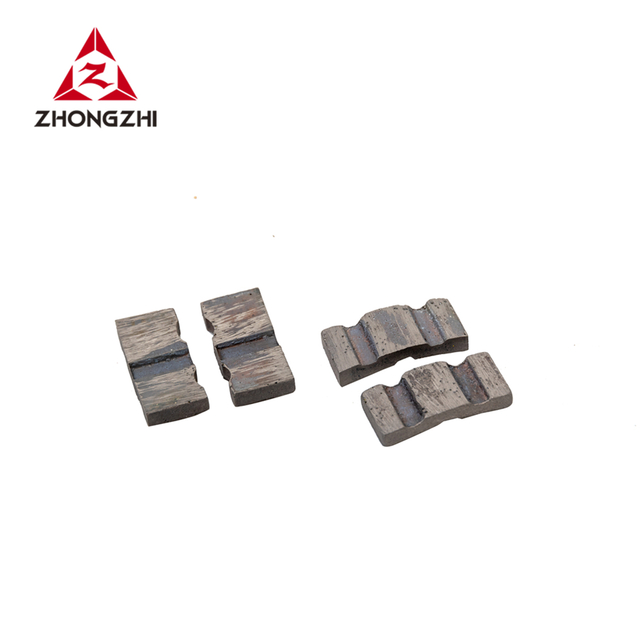
Diamond segments are essential tools in many industries due to their unique cutting, grinding, and drilling abilities. Their design and composition enable them to handle tough materials efficiently, making them versatile for various applications.
Granite and marble are widely used natural stones in construction and decoration. Diamond segments excel in cutting these stones because of their hardness and precision. For granite, which is very hard, diamond segments with a softer metal bond wear down faster. This exposes fresh diamonds continuously, maintaining cutting efficiency. Marble, being softer, requires diamond segments with a harder bond to hold the diamonds longer, ensuring a smooth, polished finish without chipping edges.
Diamond segments shaped in convex or layered sandwich forms are often preferred for granite and marble cutting. These shapes reduce friction and heat, providing cleaner cuts and extending segment life. Large gang saws and diamond circular saw blades equipped with these segments achieve high productivity in stone processing plants.
Concrete is a composite material that demands robust tools for drilling and grinding. Diamond segments used for concrete are typically designed with step-shaped or L-shaped profiles. These forms help in better cooling and debris removal, essential for maintaining tool performance during heavy-duty work.
In drilling applications, diamond segments allow precise hole creation in reinforced concrete, asphalt, and similar materials. For grinding, they smooth rough surfaces and prepare floors for finishing. The metal bond in these segments is usually balanced to withstand abrasive wear while exposing diamonds efficiently. Additives like tungsten carbide enhance wear resistance, making the segments durable under harsh conditions.
Beyond stone cutting and concrete work, diamond segments find use in many other fields. They are employed in asphalt cutting for road construction, tile cutting for interior finishing, and even glass processing. Each industry requires diamond segments tailored to its material hardness and cutting conditions.
For example, asphalt cutting demands segments that resist high temperatures and wear quickly to expose new diamonds. Tile cutting needs finer diamond grits for smooth edges without cracking. Manufacturers customize diamond formulas and segment shapes to meet these diverse needs, ensuring optimal performance and cost-effectiveness. Match diamond segment types and shapes carefully to your material and cutting conditions to boost efficiency and extend tool life.
Diamond segment performance depends on several key factors. Understanding these helps in selecting the right segment for specific stone processing tasks. The main factors include the type and hardness of the material, diamond grit size and concentration, and balancing performance with lifespan.
The type and hardness of the material being cut or ground greatly affect diamond segment behavior. Hard materials like granite require diamond segments with softer metal bonds. The softer bond wears away faster, exposing fresh diamonds continuously to maintain cutting efficiency. If the bond were too hard, diamonds would dull quickly, reducing performance.
For softer materials such as marble, the bond should be harder. A hard bond holds diamonds longer, preventing premature loss and ensuring a smooth finish. Using the wrong bond hardness can cause rapid wear or poor cutting quality. Manufacturers carefully design bonds to match specific materials, optimizing segment life and cutting speed.
Diamond grit size refers to the size of diamond particles embedded in the segment. Larger grit sizes are used for rough cutting and fast material removal. Smaller grits suit fine grinding and polishing, producing smoother surfaces. Using the right grit size affects both the quality and speed of the work.
Concentration means how many diamond particles are present per segment volume. Higher concentration increases cutting power but can raise costs. Lower concentration reduces cost but may lower performance. The ideal concentration balances cutting efficiency and tool lifespan.
For example, cutting hard granite often requires smaller, harder diamonds at moderate concentration. Softer stones allow larger diamonds with higher concentration for faster cutting.
Choosing between high performance and long lifespan is a trade-off. High-performance segments cut faster but wear out sooner. Long-life segments last longer but may cut slower. Many manufacturers offer formulas targeting medium performance and lifespan to balance cost and efficiency.
Users must decide priorities based on their needs. For high-volume production, faster cutting may be preferred despite shorter tool life. For precision work or costly materials, longer lifespan reduces downtime and replacement costs. Match diamond segment bond hardness and grit size carefully to your material’s hardness to maximize cutting efficiency and extend segment life.
Modern diamond segments benefit greatly from advanced bonding techniques that enhance their durability and cutting efficiency. Traditional bonding methods have evolved to include hot pressing, vacuum sintering, and laser welding. These methods improve the metal binder matrix's density and bonding strength, ensuring diamonds stay firmly embedded during intense cutting or grinding.
Laser welding, for example, creates a robust connection between diamond segments and the saw blade substrate. This reduces segment loss and increases tool life. Additionally, vacuum sintering minimizes oxidation and porosity in the metal matrix, resulting in segments with better wear resistance and thermal stability.
These bonding advancements also allow for more precise control over segment shape and size, optimizing performance for specific applications. By improving the bond between diamonds and the matrix, manufacturers achieve segments that maintain sharpness longer and withstand harsh working conditions.
Diamond segment formulas have become highly specialized to meet the demands of various materials and cutting environments. Manufacturers now tailor the mix of synthetic diamonds, metal powders, and additives to optimize performance for particular tasks.
For instance, segments designed for granite cutting use softer metal bonds to wear away quickly, exposing fresh diamonds continuously. Conversely, marble segments have harder bonds to hold diamonds longer and provide a polished finish.
Additives like tungsten carbide or graphite are adjusted to improve wear resistance or thermal conductivity depending on the application. Some formulas focus on maximizing cutting speed, while others prioritize segment lifespan or cost efficiency.
This customization ensures that diamond segments perform optimally across industries—from stone fabrication to concrete construction—reducing downtime and lowering operational costs.
The diamond segment industry continues to innovate, driven by the need for higher efficiency and sustainability. Future trends include:
Nano-Diamond Integration: Incorporating nano-sized diamonds to enhance cutting precision and surface finish.
Eco-Friendly Binders: Developing metal matrices with reduced environmental impact, using less toxic metals or recyclable materials.
Smart Segments: Embedding sensors to monitor wear and temperature in real-time, enabling predictive maintenance.
3D Printing: Using additive manufacturing to create complex segment shapes that improve cooling and debris removal.
These technologies promise to transform diamond segment manufacturing, making tools smarter, more durable, and better suited to diverse materials. Collaborate with manufacturers to develop custom diamond segment formulas tailored to your specific materials and cutting conditions for optimal performance and cost savings.
Diamond segments are crucial in stone processing, composed of synthetic diamonds and a metal binder matrix. They cut, grind, and drill tough materials efficiently. Innovations like advanced bonding techniques and custom formulas enhance their performance. The future of diamond segments includes eco-friendly binders and smart segments. Zhongzhi offers high-quality diamond segments, providing exceptional value and efficiency in various applications. Their products are designed to meet diverse cutting needs, ensuring optimal performance and cost savings.
A: A Diamond Segment is a tool component made with synthetic diamonds and a metal binder matrix, used for cutting, grinding, and drilling hard materials like granite and marble.
A: A Diamond Segment is attached to tools like saw blades or drill bits, where it cuts or grinds materials by exposing sharp diamond edges as the metal matrix wears down.
A: Synthetic diamonds are used in Diamond Segments for their uniform hardness and consistent quality, essential for reliable and efficient cutting performance.
A: The cost of Diamond Segments is influenced by the quality of synthetic diamonds, the composition of the metal binder matrix, and any specialized additives used.